
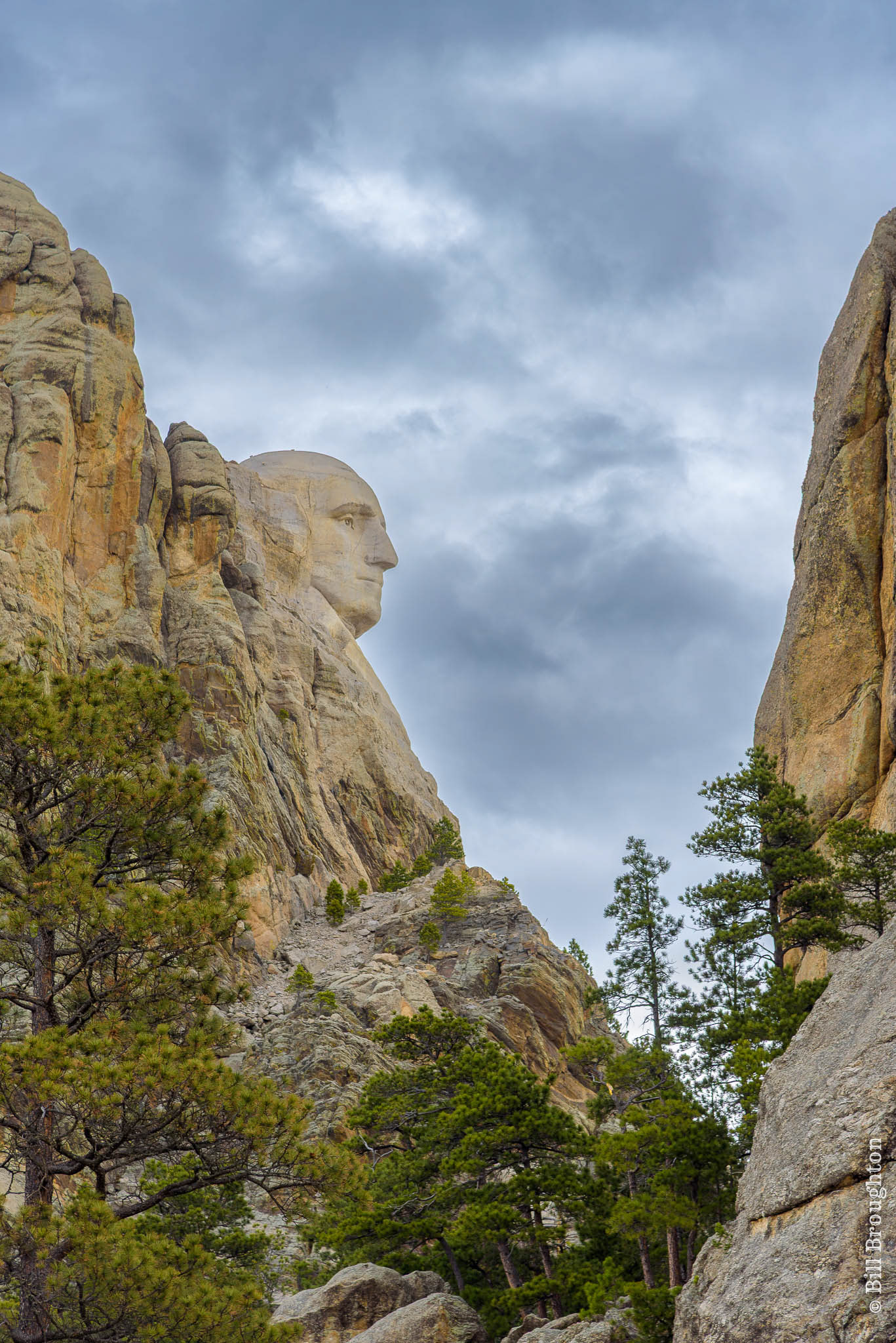
The Black Hills region of western South Dakota and northeastern Wyoming is a distinct uplift of ancient rock rising abruptly from the surrounding Great Plains. Characterized by forested hills, granite peaks, and deep canyons, the area contrasts sharply with the flatter landscapes around it. Ponderosa pine forests dominate the higher elevations, while streams and valleys carve through the terrain, supporting diverse wildlife. The region’s geology reveals some of the oldest rock formations in North America, giving the Black Hills both scenic beauty and scientific importance.
Within and adjacent to this broader region lies the Badlands, primarily in southwestern South Dakota, where erosion has shaped dramatic buttes, spires, and layered sedimentary formations. Unlike the wooded Black Hills, the Badlands are largely treeless, with exposed clay and rock creating a stark, rugged landscape. These formations record millions of years of geological history and fossil deposits, while the surrounding mixed-grass prairie supports bison, bighorn sheep, and prairie dogs. The contrast between the rolling Black Hills and the jagged Badlands highlights the geological diversity of the northern Great Plains.
The Black Hills and Badlands are also home to some of the most popular destinations in the region. Mount Rushmore National Memorial and Crazy Horse Memorial draw visitors for their monumental carvings and cultural significance, while Custer State Park is known for scenic drives and abundant wildlife. In northeastern Wyoming, Devil’s Tower rises dramatically above the Belle Fourche River valley as a massive igneous formation, sacred to many Native American tribes and famous as the nation’s first national monument. Badlands National Park offers hiking, wildlife viewing, and panoramic vistas, making the combined region a major destination for outdoor recreation, history, and geology.