
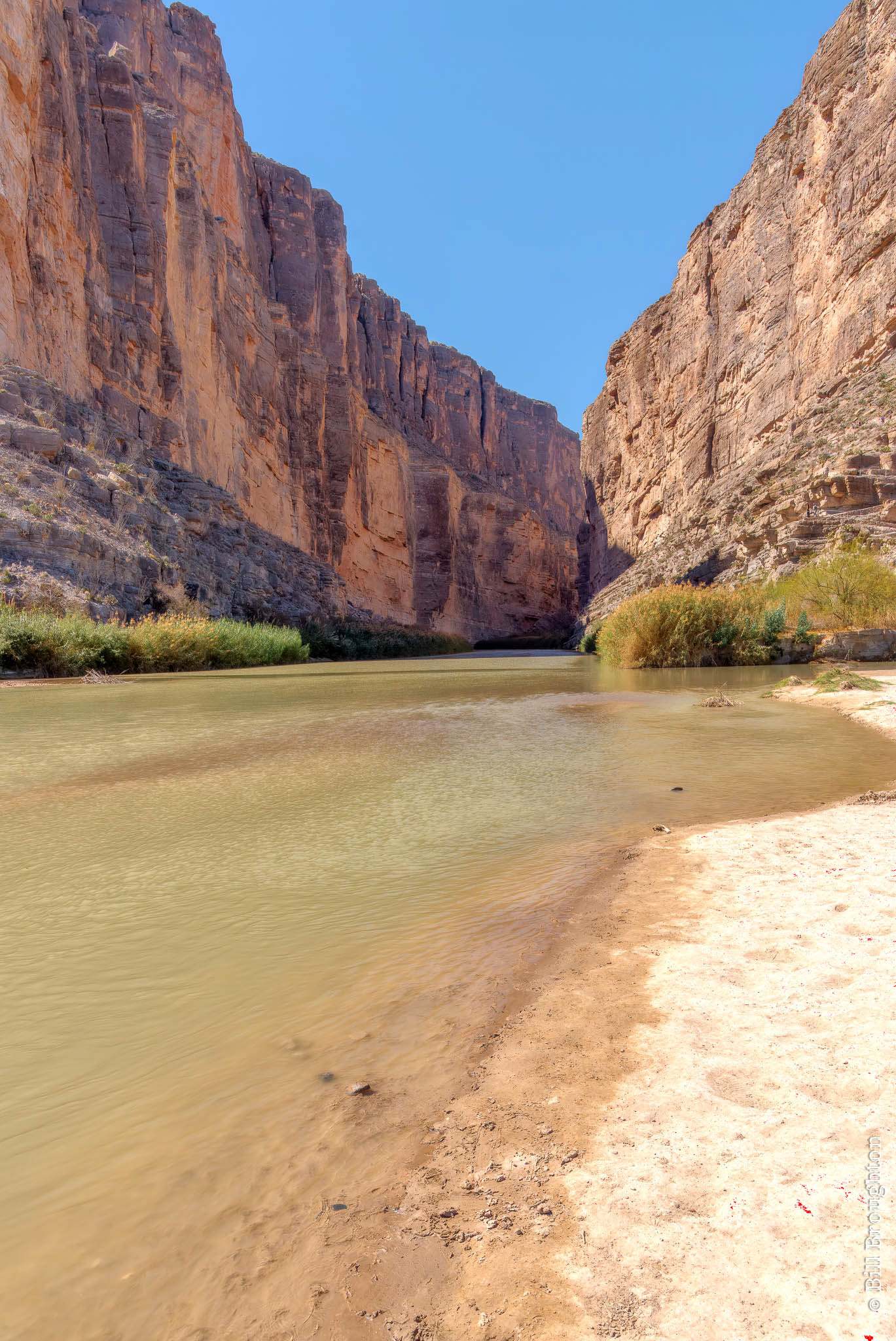
Santa Alena Canyon, Big Bend National Park
Big Bend National Park is one of the most significant protected landscapes in the American Southwest, preserving more than 800,000 acres of desert, mountain, and river environments along the Texas–Mexico border. Located in the remote region of West Texas near the sweeping curve of the Rio Grande, the park showcases a dramatic meeting of desert and mountain ecosystems within the Chihuahuan Desert. Established in 1944, Big Bend protects an extraordinary variety of plant and animal life and some of the darkest night skies in the continental United States, making it a premier destination for nature lovers, hikers, and stargazers. Its rugged terrain and isolation also preserve a sense of wilderness that is increasingly rare in modern America.
One of the park’s most popular destinations is the Santa Elena Canyon, where towering limestone cliffs rise more than 1,500 feet above the Rio Grande as the river carves a narrow passage between the United States and Mexico. Another major highlight is the Chisos Mountains, the only mountain range entirely contained within a U.S. national park. Trails such as the Lost Mine Trail and the South Rim offer sweeping views across desert basins and distant mountain ranges. These cooler high-elevation areas provide a striking contrast to the surrounding desert landscapes and support a diverse range of wildlife.
Other notable destinations include the Boquillas Canyon and the historic Castolon Historic District, where visitors can learn about early ranching and settlement in the region. The park also features scenic drives like the Ross Maxwell Scenic Drive, which passes volcanic formations, desert vistas, and access points for hiking and photography. Together, these landscapes highlight the geologic and cultural significance of Big Bend National Park, making it one of Texas’s most treasured natural areas and a gateway to understanding the unique environment of the Chihuahuan Desert.